 English
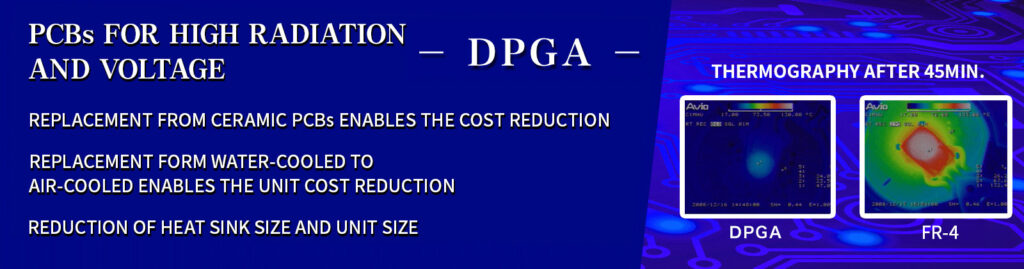
Heat Dissipation Performance – Comparison of DPGA and Others –
【Testing Conditions】
Temperature: 45 min. after turning the LED on (Celsius)
LED: REBEL (Philips Lumileds)
Wattage: 3.4W
RESULT
| Result | DPGA PCBs | Aluminum PCB | Heat Conduction CEM3 | FR-4 |
|---|---|---|---|---|
| Initial Temperature | 22°C | 22°C | 22°C | 22°C |
| 45 min. after turning power on | 47°C | 61°C | 111.5°C | 132.5°C |
| Temperature Rise | 25°C | 39°C | 89.5°C | 110.5°C |
| Thermography after 45 min |  |  |  |  |
Comparison of Temperature Rise
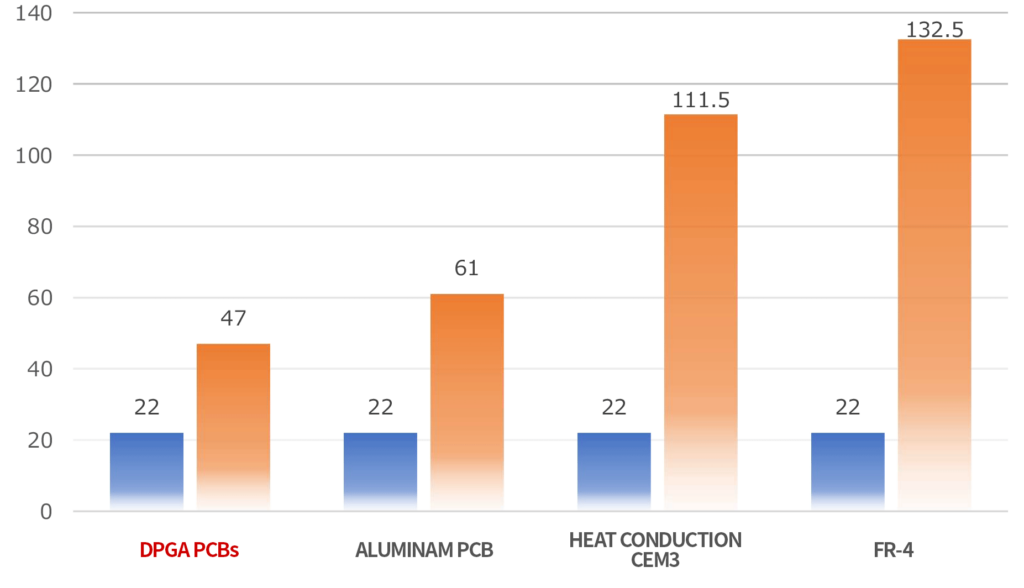
Less than one-third of the temperature rise compared to heat conduction CEM3. Therefore, the following advantages can be expected: High heat dissipation of the PCB itself enables:
- Reduction of heat sink size.
- Lowering of junction temperature.
- Higher luminance and longer life.
Reduction of Heat Sink Size and Unit Size
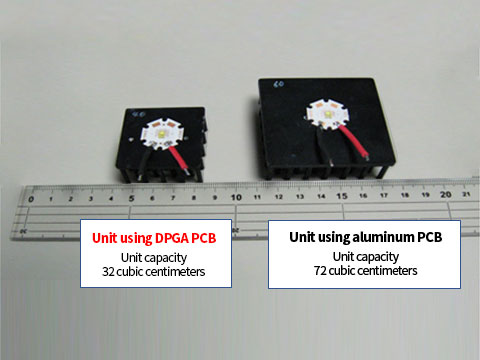
:The capacity can be reduced to 44% by using DPGA.
In case the LED temperature is 74°C:
Unit capacity with aluminum PCB = 72 cm³
Unit capacity with DPGA PCB = 32 cm³
| PCB/UNIT CAPACITY | 18 CUBIC CENTIMETERS | 32 CUBIC CENTIMETERS | 50 CUBIC CENTIMETERS | 72 CUBIC CENTIMETERS |
|---|---|---|---|---|
| DPGA | 82 DEGREES CELSIUS | 73.4 DEGREES CELSIUS | 67.5 DEGREES CELSIUS | 64.7 DEGREES CELSIUS |
| ALUMINUM PCB | 95.7 DEGREES CELSIUS | 88 DEGREES CELSIUS | 80 DEGREES CELSIUS | 74.4 DEGREES CELSIUS |
| DIFFERENCE | 13.7 DEGREES CELSIUS | 14.6 DEGREES CELSIUS | 12.5 DEGREES CELSIUS | 9.5 DEGREES CELSIUS |
Architecture and Features of the Patented DPGA Process
DPGA stands for "Daiwa Process Global Advance." This is our own unique process that enables direct connection to copper bases.
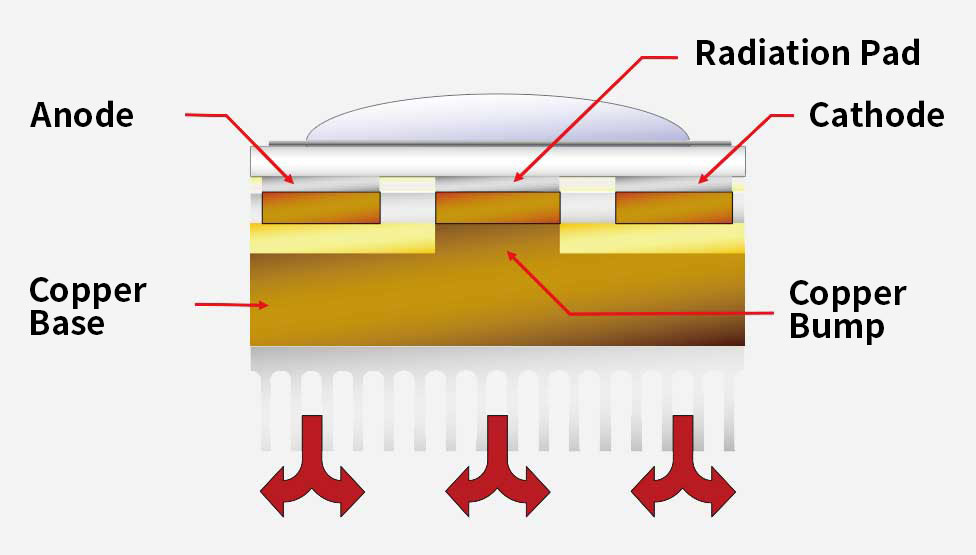
The architecture that enables high heat dissipation capability (Example with high luminance LED):
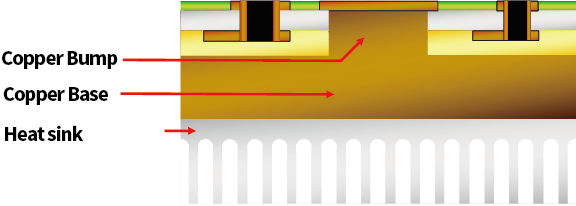
- Direct connection of the heat dissipation pad and copper base via a copper bump.
- Heat conduction of copper enables high heat dissipation for the LED.
Architectural Differences
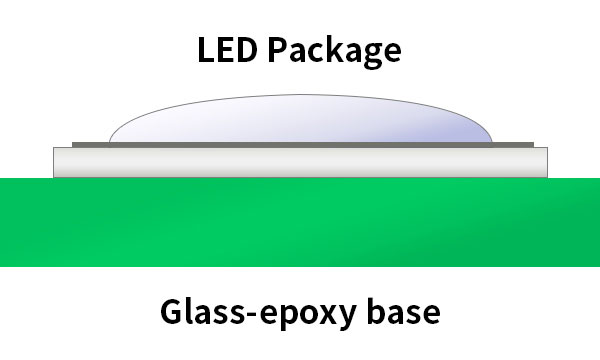
The direct connection of DPGA is the biggest difference from aluminum or CEM3 PCBs.
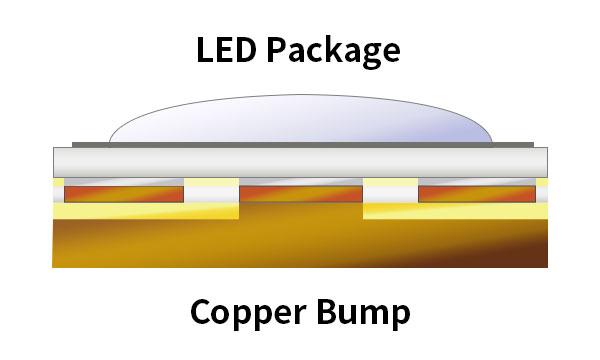
DPGA PCBs
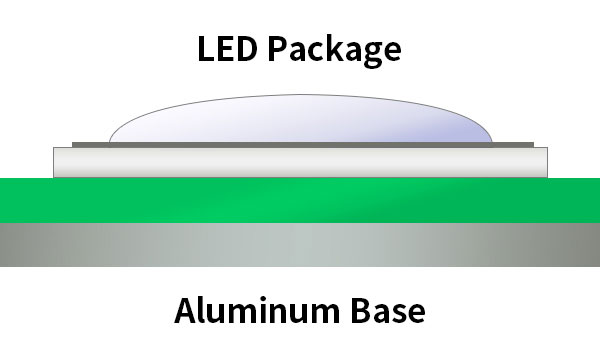
Aluminum PCB
High conduction CEM3 or FR-4
Variations in Accordance with R&D Needs
- Multi-layers on metal base
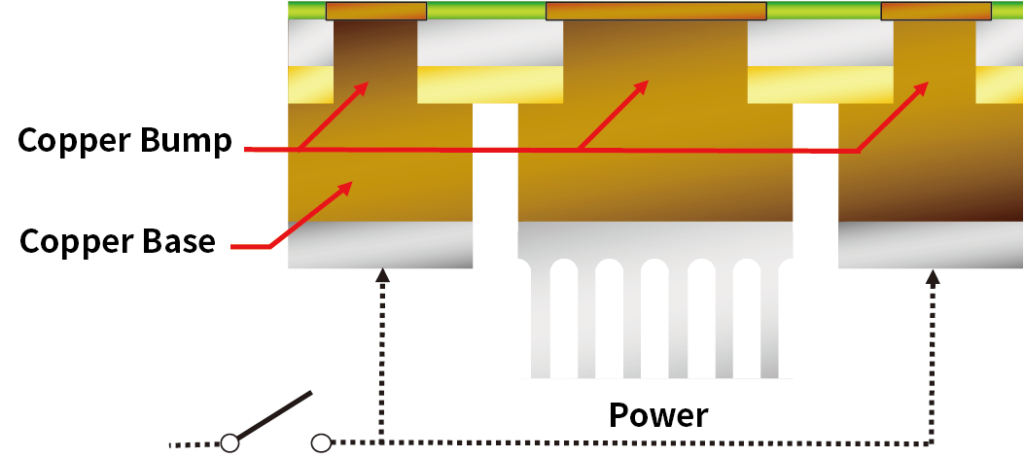
- Insulation with separated copper base
Replacement of ceramic-based PCBs
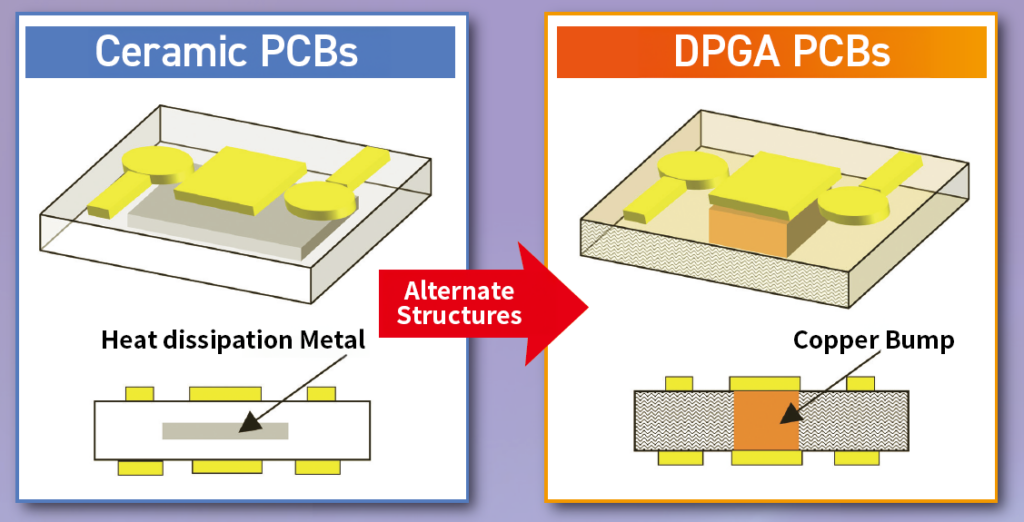
Same or higher heat dissipation capability compared to ceramic PCBs
Copper Pin Inlay
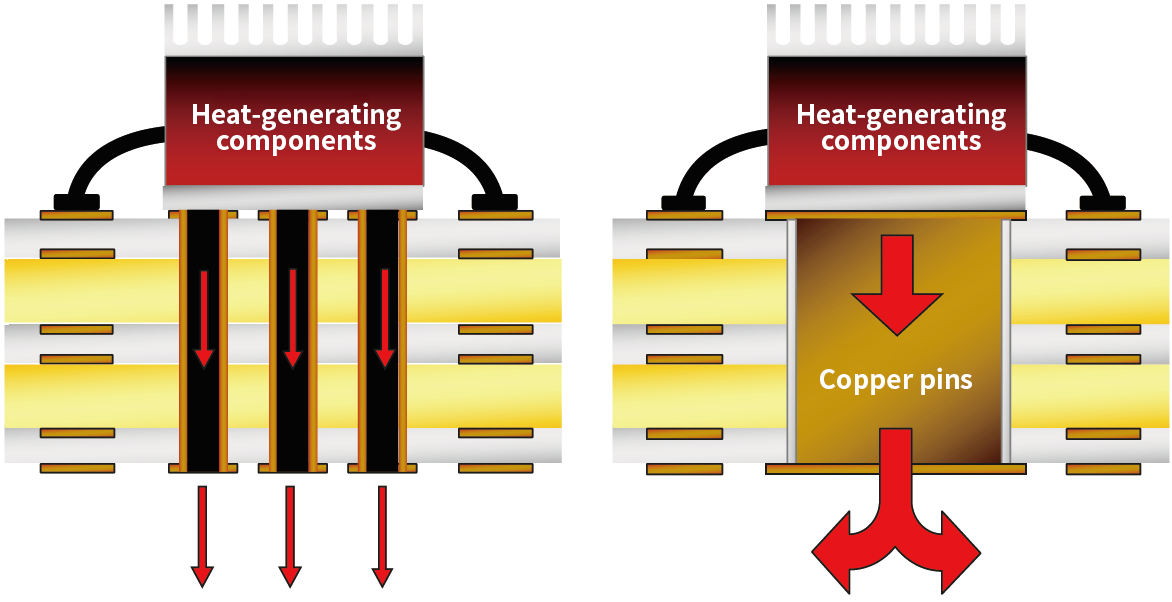
Chips can be mounted on both surfaces.
Pin-point heat dissipation for heat-generating devices.
As this is not a press-fit of copper pins, there are no concerns about cracks or remaining toxic substances.
Consultation on copper pin size and shape is available.
Five Features of DPGA
- Direct connection enables high heat dissipation and high connection reliability.
- Copper bumps of various sizes and shapes can be created.
- A mixture of different sizes/shapes of bumps in one PCB is possible.
- Thin, lightweight, and high stiffness of the PCB.
- Most suitable for LEDs and in-vehicle PCBs.
Metal-Based PCBs
We manufacture high-quality aluminum or copper-based PCBs.
- Heat conduction performance up to 10W.
High-Voltage PCBs (Thick Copper)
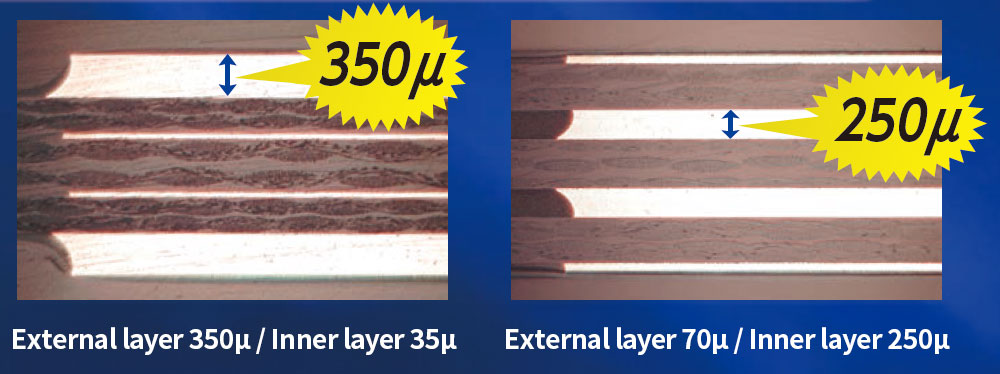
Thick copper can be used for both surface and/or inner layers.